
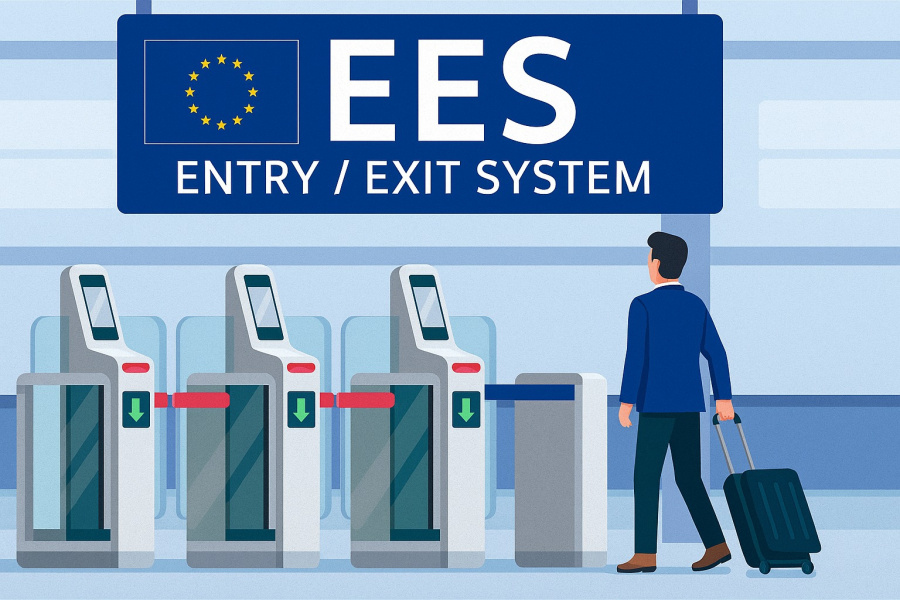
EES rollout “rolled back” again with a new target of September 2026 as EU tries to dodge summer airport chaos
Published 5 February 2026 at 11:34
By: Mr TravelON
TravelON News | Reporting with Mr TravelON, Canary Islands expert
The EU’s Entry Exit System (EES) is back in the headlines again, and this time the message is pretty clear: Brussels is giving countries permission to ease off during the summer rush, pushing what feels like “full on” enforcement out to September 2026 to avoid a repeat of the queues we have already seen during testing.
That matters a lot for places like the Canary Islands, where airports are smaller, arrival waves are intense, and EES trials have already caused real disruption. Tenerife has been one of the most talked about flashpoints, with passengers reporting long passport control lines when the system is switched on, then confusion when it is switched off again. And it is not just Spain. Geneva Airport has also been in the news for extreme waits during EES testing.
What the EES actually is (in plain English)
EES is the EU’s new digital border system for people who are not EU or Schengen citizens, travelling in for a short stay. It replaces the old passport stamping process with an electronic record of every entry and exit.
On your first trip after EES is active at your border crossing, you will typically:
- Scan your passport
- Have a facial image taken
- Give fingerprints (generally from age 12+)
After that, the idea is that future trips should be quicker because your biometrics are already on file, as long as your passport details have not changed and the record is still valid.
Why the EU is doing it
EES is designed to modernise border control by:
- Creating reliable entry and exit records
- Spotting overstayers automatically
- Reducing identity and document fraud
- Helping border officers manage passengers more efficiently over time
How long is the data kept
The general rule being reported is that records can be stored for multiple years depending on the traveller’s situation, with longer retention where overstays are recorded.
On your first trip after EES is active at your border crossing, you will typically:
- Scan your passport
- Have a facial image taken
- Give fingerprints (generally from age 12+)
After that, the idea is that future trips should be quicker because your biometrics are already on file, as long as your passport details have not changed and the record is still valid.
Why the EU is doing it
EES is designed to modernise border control by:
- Creating reliable entry and exit records
- Spotting overstayers automatically
- Reducing identity and document fraud
- Helping border officers manage passengers more efficiently over time
How long is the data kept
The general rule being reported is that records can be stored for multiple years depending on the traveller’s situation, with longer retention where overstays are recorded.
So what’s changed now and why “September 2026” is being mentioned
The key issue is summer. The EU has highlighted flexibility that allows countries to partially suspend EES operations if queues get out of hand. The reason September 2026 is now getting mentioned is because officials want to avoid airports melting down during peak season, and instead push the most consistent, widespread operation to after the summer travel rush.
In real life, this can create a messy hybrid period where one airport might run kiosks, another might revert to manual processing, and even the same airport might switch between modes depending on staffing and how many flights land at once.
In real life, this can create a messy hybrid period where one airport might run kiosks, another might revert to manual processing, and even the same airport might switch between modes depending on staffing and how many flights land at once.
Why the Canary Islands are getting hit harder
Small airports plus big arrival bursts is the perfect recipe for EES queues. In the Canaries, flights often land close together, especially from the UK. Border control does not get a steady flow, it gets slammed.
If kiosks are slow, travellers are unsure what to do, or staff are still figuring out procedures, the line can explode quickly and spill back into arrivals. That is exactly what travellers keep describing, and Tenerife has been one of the places most associated with the early chaos.
TravelON News view, from Mr TravelON in the Canaries
“One day the machines are on, next day they’re off. Staff and passengers are standing there like… what now? When four flights land together, that’s when you see the proper waits, and it wrecks transfers. In small airports you don’t have the space or the spare lanes to absorb it.”
Mr TravelON, Canary Islands expert
If kiosks are slow, travellers are unsure what to do, or staff are still figuring out procedures, the line can explode quickly and spill back into arrivals. That is exactly what travellers keep describing, and Tenerife has been one of the places most associated with the early chaos.
TravelON News view, from Mr TravelON in the Canaries
“One day the machines are on, next day they’re off. Staff and passengers are standing there like… what now? When four flights land together, that’s when you see the proper waits, and it wrecks transfers. In small airports you don’t have the space or the spare lanes to absorb it.”
Mr TravelON, Canary Islands expert
Geneva Airport is the warning sign for everyone
Geneva’s queues have become a headline example of what happens when EES hits a busy window and the process slows even slightly per person. When you multiply a small delay by hundreds of passengers, you get the kind of lines that make the news fast.
That is why the EU is leaning into the summer “pause option” now. It is trying to stop these situations becoming the norm across Europe in July and August.
What this means for UK travellers after Brexit
Brexit is the reason this feels personal for Brits. UK passport holders are now treated as “third country nationals” for Schengen entry, which is exactly who EES is aimed at.
Here is what changes for most UK holidaymakers:
- No more passport stamping once EES is fully live everywhere, because entries and exits are recorded digitally
- Biometrics at the border (photo and fingerprints for most adults, and usually kids 12+ for fingerprints)
- Tighter tracking of the 90 in 180 rule because the system can calculate your Schengen stay automatically
Important nuance: EES is not something you apply for in advance. It happens at the border when you arrive. ETIAS is a separate future online travel authorisation, and people often mix the two up.
What travellers should do now (especially for Spain and the Canaries)
Because we are heading into a “sometimes on, sometimes off” phase through summer 2026, the best mindset is simple: expect inconsistency and plan for it.
- Build extra time into arrival day if you have a transfer, especially in peak season
- Keep your passport out and ready before you reach the desks or kiosks
- If you are travelling with kids or older family members, assume it will take longer at the kiosk stage
- If you connect via a first Schengen entry point, allow extra buffer because first entry is where EES happens
The big takeaway: September 2026 is not “nothing happens until then”
This is the bit people keep misunderstanding. EES is being introduced gradually and some airports are already testing it. What the EU is doing now is giving countries breathing room to avoid summer meltdown. That is why September 2026 is being talked about as the point where things should feel more consistent for travellers.
For Canary Islands airports, that likely means more stop start operation through the busy months, and that uncertainty is exactly what causes the chaos on the ground when multiple flights land together.
For Canary Islands airports, that likely means more stop start operation through the busy months, and that uncertainty is exactly what causes the chaos on the ground when multiple flights land together.
More TravelON News: Follow Mr TravelON for Canary Islands airport updates and real traveller reports as EES continues rolling out.
What does EES stand for?
EES stands for the EU Entry Exit System. It is a digital system that records when non‑EU and non‑Schengen travellers enter and leave the Schengen Area.
Who does EES apply to?
It applies to travellers who are not citizens of the EU or the Schengen Area and who are visiting for a short stay. That includes most UK passport holders travelling to Spain, France, Italy, and other Schengen countries after Brexit.
Is EES the same as ETIAS?
No. EES is the border system that happens when you arrive and leave. ETIAS is a separate travel authorisation that is done online before travel. People mix them up all the time.
What will I have to do at the airport under EES?
Expect a passport scan, a facial image, and fingerprints (generally from age 12+). The first time is usually the slowest because your details are being enrolled.
Will it make airport queues worse?
It can, especially during the early phase and at busy times when multiple flights land together. Small airports, like many in the Canary Islands, can feel it more because there is less space and fewer lanes to recover when things slow down.
Why were there delays in places like Tenerife and Geneva?
Testing and partial operation has created a stop‑start situation. When machines are on one day and off the next, it confuses passengers and staff. Add a surge of arrivals and you can end up with long waits and knock‑on delays to transfers.
Does EES change the 90 days in any 180 days rule?
The rule itself does not change, but EES makes it easier for authorities to track it accurately because entries and exits are recorded digitally rather than relying on stamps.
Is September 2026 the start date?
Think of it more like the point when things are expected to become more consistent after the summer peak. In the meantime, you can still see EES being used in phases, including switching on and off depending on the airport and how busy it is.
What should I do if I have transfers booked in the Canaries?
Build buffer time into your arrival plan, especially in peak season. Keep your passport ready and expect a slower first entry if EES is active that day. If you have a tight onward connection, allow extra time because delays can ripple fast.
Plan Your Next Trip
Alongside the latest travel news from Mr TravelON, TravelON World helps holidaymakers find trusted travel services, destination information and experiences to plan their next trip with confidence.
About the author
Mr TravelON is the brand ambassador for TravelON and one of the most watched travel experts in the Canary Islands, with more than 400000 followers across YouTube, TikTok and Facebook. Mr TravelON has worked in tourism for over 25 years with tour operators, excursion suppliers and the local Canary Islands tourism board. He is on the ground in tourist destinations filming content, reviewing tours and talking with holidaymakers every day. His advice comes from real experience and direct contact with the island. As a Travel expert and editor he brings the most up to date travel news.