
Lanzarote Camel Rides Under Scrutiny: Inside Timanfaya Experience & Welfare Debate
Published 20 April 2026 at 08:05
By: Mr TravelON
An exclusive on-the-ground report from Lanzarote reveals the truth behind Timanfaya camel rides, as debate grows over animal welfare and local heritage.
A growing campaign to end camel rides in Timanfaya has put one of Lanzarote’s most recognisable visitor experiences back in the spotlight. In an exclusive early-morning report, Mr TravelOn joined local representatives and camel owners from Uga to Timanfaya to see how the animals are kept, how the work is organised, and why the issue matters to travellers visiting Lanzarote.
What we know
- A campaign linked to the Franz Weber Foundation has gathered more than 34,000 signatures calling for an end to camel rides in Timanfaya.
- Timanfaya’s official visitor information still lists the camel ride experience as a visitor service operated through Yaiza Town Hall.
- Yaiza has publicly defended the activity as sustainable, culturally important and tied to Lanzarote’s camel sector.
- The Canarian camel is recognised as a native breed with deep historic links to Lanzarote and Fuerteventura.
- The issue has become increasingly emotional online, with strong opinions on both animal welfare and local heritage.
What happened
Today’s special report from Mr TravelOn was not designed to campaign for or against Lanzarote’s camel rides. The aim was to show viewers and readers what most tourists never get to see: the reality behind one of the island’s most iconic and most debated visitor experiences.
On the back of growing attention around the petition led by campaigners seeking to ban camel rides in Timanfaya, Mr TravelOn set out before sunrise for an exclusive visit from Uga to Timanfaya National Park. Joined by local councillor Freay Finch, he visited the camel farm, walked the route down towards Timanfaya, and then continued up to the camel station where owners demonstrated how the system works in practice.
The report then continued with further local reaction, including interviews with councillor Águeda Cedrés at Yaiza Town Hall and Yaiza mayor Óscar Noda, who spoke about the historic importance of the camel in Lanzarote and the need not to judge the entire sector purely through isolated images on social media.
What makes this report different is that it goes beyond headlines and viral posts. Rather than relying only on outside commentary, Mr TravelOn was on the ground seeing the animals, speaking directly to the people who care for them, and documenting the daily reality for viewers to judge for themselves.
What Mr TravelOn saw on the ground
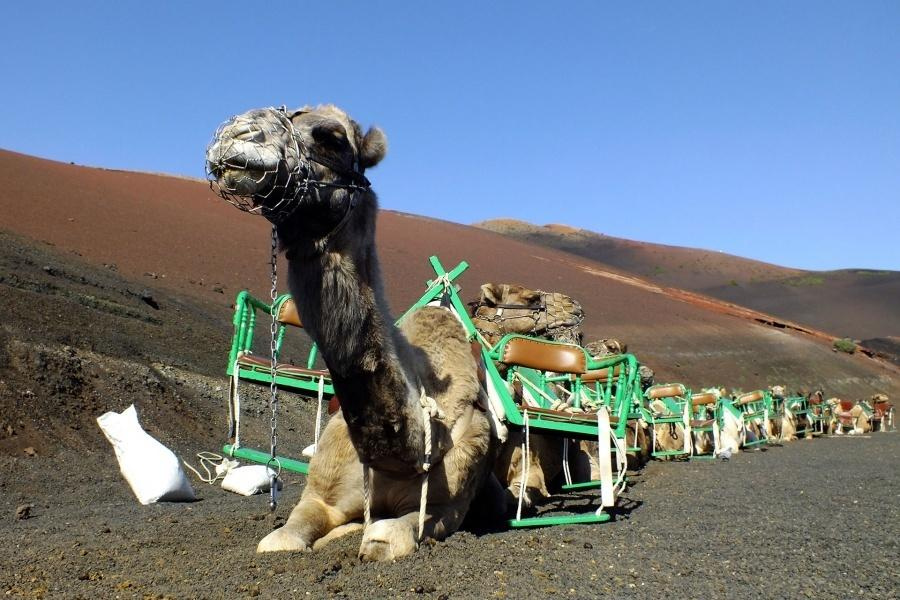
According to the filming and first-hand access during the visit, the camels shown during the report appeared calm, well managed and closely connected to the families who keep them. Owners explained that the animals are not pushed continuously, that they work on a controlled routine, and that they are treated as part of family life rather than as throwaway tourist assets.
The explanation given on site was that these camels work on a structured schedule, typically around three days per week, with rest built into the system. The owners also demonstrated how the camels are handled and showed viewers the setup both away from the tourist area and at Timanfaya itself.
Mr TravelOn even took part in the experience personally, showing viewers what the ride looks like from the visitor’s point of view. That gave the report a full-circle perspective: from the farm and the route, to the working area, to the actual tourist experience itself.
The result is a piece that does not simply repeat a narrative. It shows the camels, shows the conditions, shows the handlers, and lets the audience see a side of Lanzarote that most visitors will never normally witness.
The history of camels in Lanzarote
To understand why this issue has struck such a nerve locally, it is important to understand the history of camels in Lanzarote.
The Canarian camel is not just a tourist symbol. For generations, camels played a major role in agriculture, transport and daily life across the more arid eastern islands, especially Lanzarote and Fuerteventura. Before machinery transformed farm work, camels were widely used to help cultivate land, carry goods and support rural life in volcanic and dry terrain.
Over time, as traditional agricultural work declined, the camel’s role changed with it. In Lanzarote, that history became tied to tourism, with the Timanfaya camel rides becoming one of the island’s best-known visual experiences. For many locals, this is not simply a ride for tourists. It is part of Lanzarote’s living identity and one of the last visible links to a much older way of life.
That is why many people on the island feel strongly that the camel should not be judged purely as a tourism product. They see it as part of the island’s heritage, economy and image, especially in the south of Lanzarote where the sector remains closely linked to local families.
Why the debate has grown
The controversy has intensified after renewed pressure from animal welfare campaigners, with the Franz Weber-linked petition drawing major attention online. Campaigners argue that camel rides should end altogether and that modern tourism should move away from animal-based attractions.
At the same time, local representatives and those connected to the camel sector argue that much of the criticism lacks context. Their position is that the camels in Lanzarote are regulated, well cared for, and part of a sustainable local tradition that supports the preservation of the breed and the families connected to it.
Óscar Noda has defended the sector publicly, stressing the importance of institutional unity in support of Lanzarote’s camel tradition and warning against reducing the issue to a few clips or snapshots shared online without wider understanding.
This is what makes the debate so sensitive. It is not just about tourism. It is about animal welfare, island identity, heritage, local jobs, and how quickly public opinion can be shaped by selective content on social media.
What this means for travellers
For visitors to Lanzarote, the most important takeaway is that this is now a visible and emotionally charged issue. Some tourists will feel completely comfortable taking part in the camel ride after seeing the animals and understanding the local context. Others may prefer not to engage in any attraction involving animals. That choice is personal.
The value of Mr TravelOn’s report is that it gives travellers more information before they decide. Rather than simply telling people what to think, it gives them access to the history, the reality on the ground, the local voices, and the visual evidence from both the farm and Timanfaya.
That means tourists can make an informed decision based on more than a headline, more than a viral post, and more than a few seconds of footage taken out of context.
For many people, the camel is and always will be one of the defining images of Lanzarote. For others, the ethics of riding animals remain a concern. What this report shows is that the truth is more detailed than either extreme often suggests.
Analysis
Lanzarote’s camel debate says a lot about the wider travel world in 2026. Visitors increasingly want to know what sits behind the experiences they book. At the same time, local communities are pushing back when they feel their traditions are being judged from outside without enough context.
In this case, the reality appears more layered than the online argument. There is clearly a strong activist campaign against camel rides in Timanfaya. There is also a strong local defence from institutions, owners and families who insist the animals are well looked after and that the practice is sustainable and historic rather than abusive.
Mr TravelOn’s exclusive access matters because it helps move the conversation away from slogans and towards facts, visuals and direct observation. It does not try to force readers into one camp. It simply shows what is there and lets people think for themselves.
In a world where travel stories are increasingly shaped by outrage, that kind of reporting matters.
The TravelON view
This report is not about telling people what decision to make. It is about giving travellers the fullest picture possible so they can make that decision with real information.
What Mr TravelOn documented is clear: the camels he saw were very well looked after, the owners were open about how the system works, and the experience is deeply connected to Lanzarote’s history and identity. That does not remove the wider debate, but it does show that this story cannot fairly be reduced to a one-sided social media narrative.
For anyone visiting Lanzarote, the best approach is simple. Understand the history. Watch the report. Listen to both sides. Then decide for yourself whether the Timanfaya camel ride is an experience you want to be part of.
Plan Your Next Trip
Alongside the latest travel news from Mr TravelON, TravelON World helps holidaymakers find trusted travel services, destination information and experiences to plan their next trip with confidence.
About the author
Mr TravelON is the brand ambassador for TravelON and one of the most watched travel experts in the Canary Islands, with more than 400000 followers across YouTube, TikTok and Facebook. Mr TravelON has worked in tourism for over 25 years with tour operators, excursion suppliers and the local Canary Islands tourism board. He is on the ground in tourist destinations filming content, reviewing tours and talking with holidaymakers every day. His advice comes from real experience and direct contact with the island. As a Travel expert and editor he brings the most up to date travel news.