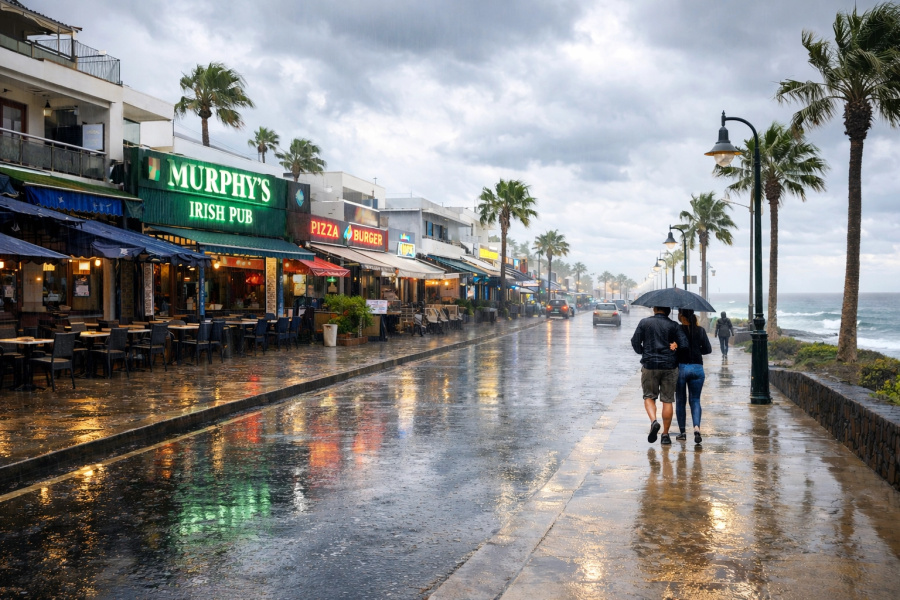
Lanzarote Weather EXPOSED: Are Tourists Really Refusing to Return?
Are tourists really refusing to return to Lanzarote bad weather? Mr TravelON goes on the ground in Puerto del Carmen to challenge misleading headlines and uncover what holidaymakers are actually saying.
Tabloid-style reports claiming tourists are “done” with Lanzarote because of wind or rain are being challenged by Mr TravelON, who says social-media-driven headlines are fuelling travel anxiety, misleading readers and unfairly damaging local businesses in the Canary Islands.
What we know
- Several UK and Irish tabloid-style stories have recently claimed Lanzarote tourists “won’t return” or “won’t go back” because of weather-linked complaints seen online.
- Those reports appear to lean heavily on social media comments and viral clips rather than first-hand reporting from the island.
- Mr TravelON went to Puerto del Carmen to speak directly to visitors currently on holiday in Lanzarote.
- His reporting found that most tourists understand Lanzarote can be breezy at times and do not see occasional wind or showers as a reason to avoid returning.
- Official tourism data continues to show strong satisfaction and repeat-visit levels for Lanzarote.
Mr TravelON has hit back at what he calls “dangerous” weather scare stories about Lanzarote after several mainstream tabloid outlets published dramatic headlines suggesting tourists are refusing to return to the island because of wind, rain or unsettled conditions.
The concern is not that holidaymakers sometimes complain online. That happens in every destination. The issue, he says, is when comment threads, social posts and short clips are turned into sweeping headlines that give the impression a major holiday hotspot is suddenly being rejected by visitors.
For families with trips booked, that kind of coverage can create unnecessary worry before they even board the plane. For businesses in Lanzarote, especially in tourist areas such as Puerto del Carmen, it can also reinforce a false picture that the island is somehow failing as a destination when the reality on the ground is often very different.
What happened
In recent days, a number of widely shared stories in the UK and Ireland pushed versions of the same angle: tourists in Lanzarote were supposedly saying they were “done” with the island or would not return because of weather-related frustration. The headlines were sharp, emotive and built for clicks.
But rather than relying on online outrage, Mr TravelON took the issue to the streets of Puerto del Carmen and asked the people who matter most: holidaymakers who are actually in Lanzarote right now.
Speaking directly to visitors on real holidays, he asked how the weather had really been, whether recent conditions had spoiled their stay, and whether a bit of wind or the odd rainy spell would be enough to put them off booking Lanzarote again.
His view is simple. That is what travel reporting should look like: get on the ground, ask real people, test the headline against reality, and give travellers practical context instead of feeding anxiety.
What Mr TravelON found in Puerto del Carmen
The response from tourists was far more balanced than the headlines suggest. Visitors interviewed in Puerto del Carmen generally accepted that Lanzarote, like the rest of the Canary Islands, can have breezy days and occasional unsettled weather, particularly outside the peak summer pattern.
Crucially, that did not automatically translate into regret, panic or a vow never to return. For many holidaymakers, it was simply part of travelling to an Atlantic island destination with a year-round climate that is usually mild, but never guaranteed to be wall-to-wall sunshine every single day.
Some said they had enjoyed plenty of warm weather despite breezy moments. Others said that even when conditions were changeable, it had not stopped them enjoying the beaches, restaurants, promenades and resort atmosphere. The wider message was clear: a few clips online do not tell the full story of a destination.
According to Mr TravelON, this is exactly why street-level reporting matters. It replaces exaggeration with evidence, and gives future travellers a more accurate sense of what to expect.
Why these headlines matter for travellers
Weather headlines about Lanzarote and the Canary Islands are especially sensitive because they hit people where holiday stress already lives: uncertainty. Travellers worry about wasted money, ruined plans, disappointed children and whether they have chosen the wrong destination.
When that fear is amplified by dramatic articles built around a handful of posts, the result can be a distorted impression that conditions are far worse, or more unusual, than they really are.
Mr TravelON says this kind of reporting can have three real-world effects. First, it causes avoidable travel anxiety for people with holidays already booked. Second, it risks harming the reputation of Lanzarote and other Canary Islands destinations. Third, it can impact local businesses that depend on confidence, especially bars, restaurants, excursion operators, taxis and small independent tourism firms in resort areas.
For a destination economy, perception matters. That is why accuracy matters too.
What the official picture says about Lanzarote
The broader data does not support the idea of an island being abandoned over a bit of wind. Official Canary Islands tourism research for 2025 showed Lanzarote scoring strongly for visitor satisfaction, repeat tourism and recommendation intent. The island recorded an average satisfaction score of 8.91 out of 10, with 78.4% of visitors classified as repeat tourists and a return intention score of 9.01. Recommendation intent was even higher at 9.20. Those are not the numbers of a destination visitors are rushing to quit. :contentReference[oaicite:0]{index=0}
Lanzarote also welcomed around 2.87 million tourist arrivals in 2025 in the Canary Islands’ official tourism profile, underlining that the island remains one of the region’s major holiday draws. :contentReference[oaicite:1]{index=1}
In Puerto del Carmen itself, official destination pages continue to present the resort as Lanzarote’s main tourist area, with more than six kilometres of beaches, calm-water bathing areas and the full range of visitor services that have made it one of the island’s most established holiday zones. :contentReference[oaicite:2]{index=2}
Yes, weather changes happen in Lanzarote – but context is everything
None of this means travellers should ignore the weather. Lanzarote can get strong winds, calima episodes, rough sea conditions and occasional periods of rain. When there is a genuine issue, the right place to look is official forecasting and warning information, not a dramatic headline built from comments.
Spain’s state weather agency, AEMET, publishes official warnings for the Canary Islands, including Lanzarote, covering hazards such as wind, coastal conditions and suspended dust. On 19 April 2026, AEMET’s Lanzarote warning detail showed low-level suspended dust risk for Lanzarote, while its wider Canary Islands forecast and warning service remained the primary official reference point for any significant weather event. :contentReference[oaicite:3]{index=3}
That is the difference between responsible reporting and weather clickbait. Real reporting tells people what the official warning is, how long it is expected to last, and what it means for flights, beaches, ferries or excursions. Bad reporting jumps straight from a social post to a sweeping conclusion about an entire island.
What this means for travellers with holidays booked
If you have a trip to Lanzarote or elsewhere in the Canary Islands coming up, the smartest approach is to separate online noise from verified information.
A breezy day in Puerto del Carmen is not unusual. Neither is the occasional spell of cloud or light rain at certain times of year. Most of the time, visitors still get exactly what Lanzarote is known for: warm temperatures, outdoor living, beaches, volcanic scenery and a dependable year-round holiday product.
Travellers should check official weather forecasts, follow airline or tour operator advice if there is a named weather event, and keep perspective when they see viral clips on social media. One bad afternoon, one windy beachfront video or one frustrated comment does not equal a destination-wide collapse.
Mr TravelON’s message is that travellers deserve reporting that informs, not alarms. If a situation is serious, say so. If it is being exaggerated, say that too.
Analysis
The bigger problem here is not just one headline. It is a wider trend in travel publishing where low-cost content is built around social posts because it is fast, emotional and easy to distribute. The result is coverage that can look like reporting without doing the hard work of reporting.
Lanzarote is an easy target for these stories because it is popular, recognisable and heavily searched in the UK and Irish markets. Put “tourists won’t return” and “Lanzarote” in the same headline and it is almost guaranteed to trigger clicks from people with a booking, a memory, or an opinion.
But travel journalism should do more than chase reaction. It should test claims against on-the-ground reality, use official sources, reflect local context and help people make better decisions. That is what Mr TravelON set out to do in Puerto del Carmen, and it is why his reporting lands differently.
A windy day is not a crisis. A rainy spell is not the end of Lanzarote. And a handful of social media comments should never be dressed up as the final verdict on one of Europe’s most resilient year-round holiday destinations.
The TravelON World view
Lanzarote is not beyond criticism, and genuine disruption stories should always be reported clearly and honestly. But when stories about the island are pushed beyond the facts, travellers are misled and local communities pay the price.
Mr TravelON’s reporting from Puerto del Carmen is a reminder of what trustworthy travel journalism looks like: real people, real questions, local context and practical truth. In an era of viral weather scare stories, that matters more than ever.