What we know
- British travellers are being advised to arrive at some EU airports at least three hours before their return flight.
- The warning is linked to longer border queues under the EU Entry/Exit System, known as EES.
- EES affects non-EU short-stay travellers, including British passport holders.
- Spanish airport operator Aena already gives 3 hours as the general rule for non-Schengen departures.
- The key question now is whether airlines and check-in desks will open early enough to match the advice.
- Package holiday customers should follow airline and tour operator advice, but they should not panic.
- Mr TravelON says 2026 travel will need more patience, more planning and less last-minute airport rushing.
British Travellers Warned: Get to EU Airports 3 Hours Before Your Flight
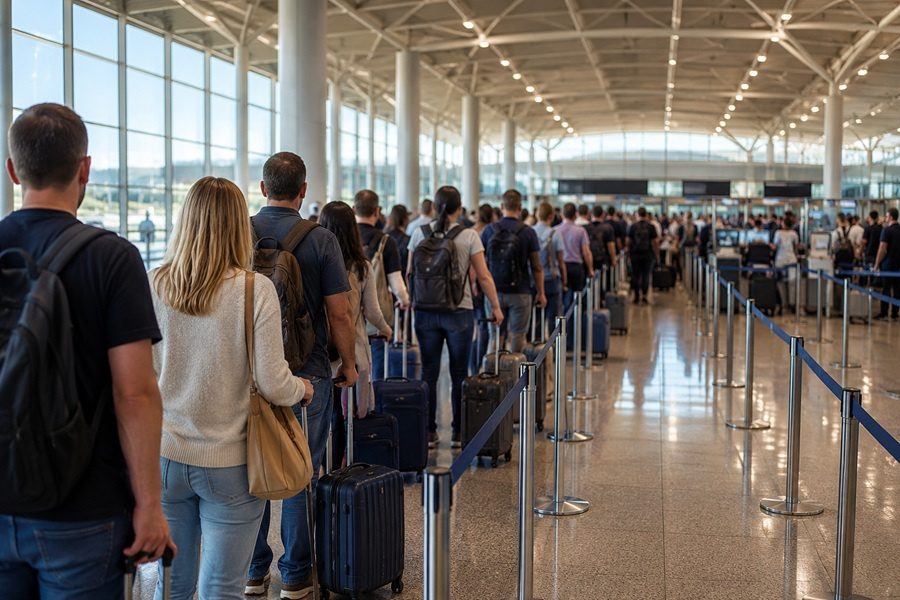
British holidaymakers flying home from European airports are being told to allow at least three hours before departure as the new EU Entry/Exit System continues to put pressure on border checks.
The warning has been reported in the UK press after Wizz Air’s UK boss said passengers should give themselves more time at airports because of longer queues linked to EES. Reports have highlighted Spain, Portugal and France as destinations where British travellers could face extra waiting times during busy periods.
For TravelON World readers, this matters because Spain and the Canary Islands are among the most important destinations for UK holidaymakers. Tenerife South, Lanzarote, Gran Canaria and Fuerteventura all handle large numbers of British passengers every week, especially during school holidays, weekends and peak summer travel days.
This is not a reason to cancel a holiday. It is a reason to be organised.
What Is EES and Why Is It Causing Longer Airport Queues?
EES stands for the Entry/Exit System. It is the EU’s new digital border system for registering non-EU travellers entering and leaving the Schengen area for short stays.
For British passport holders, this means the old passport-stamp system has been replaced by digital checks. The system records passport information, entry and exit dates, the location of the border crossing, facial images and fingerprints.
In simple terms, the system is designed to make Schengen border checks more digital and more secure. In practice, the concern for travellers is time. If the system is working smoothly, checks may be manageable. If airports are busy, desks are understaffed, machines are slow, families are travelling, or several UK flights are leaving close together, queues can quickly build.
Why British Travellers Are Affected
Since Brexit, British passport holders are treated as non-EU travellers when entering and leaving the Schengen area. That means British tourists are now part of the group that must be registered and checked under EES.
This is why EES has become such a big issue for UK holidaymakers. It is not just about arriving in Europe. It can also affect passengers flying home, especially when several flights to the UK are departing close together.
Spain Airport Advice: 3 Hours for Non-Schengen Flights
Spanish airport operator Aena already advises passengers to arrive with enough time to avoid unexpected problems. At Spanish airports including Tenerife South, the general rule is 3 hours before non-Schengen flights and 2 hours before domestic or Schengen flights.
Flights from Spain to the UK are non-Schengen departures. That means the 3-hour guidance is not completely new in Spain, but the EES warning gives it a new importance for British tourists.
The problem is that many passengers have become used to arriving later, especially if they have checked in online and are travelling with hand luggage only. Mr TravelON says that habit may need to change in 2026.
Will Airline Check-In Desks Open Earlier?
One of the biggest questions Mr TravelON raises is simple: if passengers are being told to arrive three hours early, will the airline check-in desks actually be open early enough?
This is an important point. Turning up three hours before a flight is useful if you can check in, drop your bags, go through security and reach passport control in good time. But if check-in desks are not open, passengers may simply end up waiting landside with their suitcases.
Airlines, airports and tour operators will need to work together if this advice becomes the new normal during busy travel periods. It is not enough to tell people to arrive early if the passenger journey has not been organised around that advice.
What Travellers Should Do
- Check your airline app before leaving your hotel.
- Check whether online check-in is available.
- Find out when bag drop opens for your airline.
- Listen to advice from your tour operator or holiday rep.
- Do not assume every airport will operate the same way.
- Allow extra time if travelling with children, elderly passengers or special assistance needs.
Package Holiday Travellers: Do Not Panic, But Follow the Advice
Mr TravelON says package holiday customers should not let the 3-hour airport warning ruin the final day of their holiday. If you are travelling with a major tour operator, you should follow the instructions given by your airline, transfer provider and holiday company.
Package holidays give travellers a stronger level of support than many DIY bookings because the package organiser is responsible for the proper performance of the travel services included in the package. That does not mean passengers can ignore airport advice, but it does mean there should be a clearer support route if something goes seriously wrong.
The key message is this: do not stress, but do not be casual either. If your transfer pick-up is earlier than usual, there is probably a reason. If your airline says arrive three hours early, take that advice seriously.
For DIY travellers who have booked flights, hotels and transfers separately, it is even more important to plan ahead. If you miss your flight because you left too late, your hotel or private transfer company is unlikely to be responsible.
Why 3 Hours at the Airport May Not Be the End of the World
Nobody wants to spend extra time at the airport. But Mr TravelON makes a fair point: on many holidays, check-out is already around 11am or 12 noon. If your return flight is later in the day, you may already have several hours to fill.
In that situation, getting to the airport earlier may actually be less stressful than hanging around a hotel reception, sitting on your suitcase, or trying to squeeze in one last rushed lunch before a transfer.
Yes, airport prices can be painful. Yes, queues can be frustrating. Yes, nobody wants to spend the last part of their holiday staring at a departure board. But missing a flight is worse.
Mr TravelON’s View
Expect the worst, hope for the best. If the airport is busy, you are prepared. If it is quiet, you get through early, have a coffee, watch the planes and relax. Either way, your holiday does not need to end in a panic.
2026 Travel: Be Prepared, But Do Not Lose the Excitement
Travel in 2026 is becoming more complicated. Holidaymakers are dealing with EES, changing passport checks, possible airport queues, airline schedule changes, strikes, weather disruption and a travel industry still trying to adapt to new systems.
Mr TravelON says this year could be a testing one for travellers, especially during peak periods. But that does not mean people should stop travelling. It means they need better information before they go.
The worst thing holidaymakers can do is arrive at the airport with no idea what is happening. The best thing they can do is prepare, allow time, follow official advice and keep perspective.
A three-hour airport arrival time is annoying. It is not the end of your holiday. It is a buffer.
Is the EU Backlash Against Brexit Now Backfiring on Tourist Destinations?
This is where the travel debate becomes more serious. EES is an EU border system, not a Spain-only rule, and it applies to non-EU travellers from many countries. But for British tourists, the change is being felt directly because the UK is no longer part of the EU.
Some travellers see the new checks as part of the post-Brexit reality. Others feel the process is creating unnecessary friction for holidaymakers who have supported European tourism for decades.
The risk for destinations is obvious. If airport queues become too long, too stressful or too unpredictable, some travellers may think twice about where they go. That could hurt destinations that rely heavily on British visitors.
Spain, the Canary Islands, Portugal, Greece and France do not just receive British tourists; many areas depend on them. If even a small number of regular visitors decide the process is too much hassle, that could mean thousands of euros lost in hotels, restaurants, bars, taxis, excursions, shops and local businesses.
British Tourists Spend Big in Spain
British tourists are not a small side market for Spain. They are one of the most important visitor groups in the country.
Spanish tourism data has repeatedly shown the UK as Spain’s leading international source market. In August 2025, reports based on Spanish tourism spending figures showed UK visitors contributing around 19.2% of total international tourist spending, with an average daily spend of around €184 per person.
That matters because every extra barrier in the travel experience has an economic consequence. A British family spending a week in Spain does not just pay for flights and accommodation. They spend money on food, drinks, excursions, car hire, taxis, theme parks, water parks, boat trips, shopping and entertainment.
If destinations want British tourists to keep coming back, the travel experience needs to feel manageable. Long airport queues, unclear rules and mixed messages do not help.
What This Means for the Canary Islands
The Canary Islands have a special reason to pay attention to this story. Tenerife, Lanzarote, Gran Canaria and Fuerteventura are hugely popular with British holidaymakers, and many visitors return year after year.
These islands compete not only with mainland Spain but also with Turkey, Egypt, Cyprus, Portugal, Greece and long-haul winter sun destinations. The Canary Islands have a major advantage because they are familiar, safe, sunny and well connected from the UK.
But if travellers start to associate the journey home with stress, queues and confusion, that can damage confidence. Mr TravelON’s point is clear: the islands must keep tourists informed, airports must manage the process properly, and passengers must be realistic about travel in 2026.
Canary Islands Airports Most Relevant to UK Travellers
- Tenerife South Airport
- Lanzarote Airport
- Gran Canaria Airport
- Fuerteventura Airport
- Tenerife North Airport for inter-island and connecting travel
Practical Travel Advice: How to Survive the 3-Hour Airport Rule
If you are flying home from Spain, the Canary Islands or another EU destination, the advice is simple: prepare for a longer airport experience, even if you end up not needing all the extra time.
Before You Leave Your Accommodation
- Check your flight status.
- Check your airline app.
- Complete online check-in if available.
- Make sure passports and boarding passes are easy to access.
- Allow extra time for transfers, traffic and queues.
- Charge your phone and bring a power bank if you have one.
- Keep medication, essentials and travel documents in hand luggage.
At the Airport
- Go straight to the correct check-in or bag-drop area.
- Watch the airport information screens.
- Do not leave passport control too late.
- Keep children and family groups together.
- Ask airport staff if you are unsure where to go.
- Listen for gate announcements.
- Do not assume the queue will move quickly just because it did last year.
Reporting vs Analysis: What Is Fact and What Is Opinion?
What Happened
UK travellers have been warned in national press reports to allow at least three hours at EU airports because of longer border queues linked to EES. Spanish airport guidance already lists 3 hours as the general rule for non-Schengen departures.
What We Know
EES records digital entry and exit information for non-EU short-stay travellers, including British passport holders. The system uses passport data, facial images and fingerprints. Busy airports may experience longer queues, especially at peak times.
What This Means for Travellers
Passengers should allow more time, follow airline advice and check whether bag drop or check-in desks will be open when they arrive. Package holiday customers should also follow tour operator transfer instructions.
Analysis
Mr TravelON believes 2026 will be a challenging year for travel, but not a reason to stop travelling. The sensible approach is to expect possible delays, prepare properly and avoid letting airport stress ruin the excitement of a holiday.
Mr TravelON Final Word
Three hours at the airport may sound ridiculous, especially when you can fly from the UK to parts of Spain, Portugal or France in around the same time. But this is the reality travellers are being told to prepare for.
Mr TravelON says: do not let this put you off your holiday. Do not sit at home worrying. Do not cancel your plans because of headlines. But do take the advice seriously.
Travel has changed. The airport experience has changed. EES is here, and passengers now need to build in more time.
Get there early, stay calm, expect queues, hope for a smooth journey and enjoy your holiday. Because after all the forms, checks, queues and airport prices, the holiday is still worth it.